Clear Aligners Guide
Clear Aligners: An Introduction to Modern Orthodontics
Clear aligners have revolutionized the field of orthodontics, providing a discreet and effective way to achieve a straight smile.
Unlike traditional metal braces, these custom-made, transparent trays gently shift teeth into their desired positions.
This guide aims to provide an overview of clear aligners, their benefits, and what you can expect during treatment.
Understanding Clear Aligners
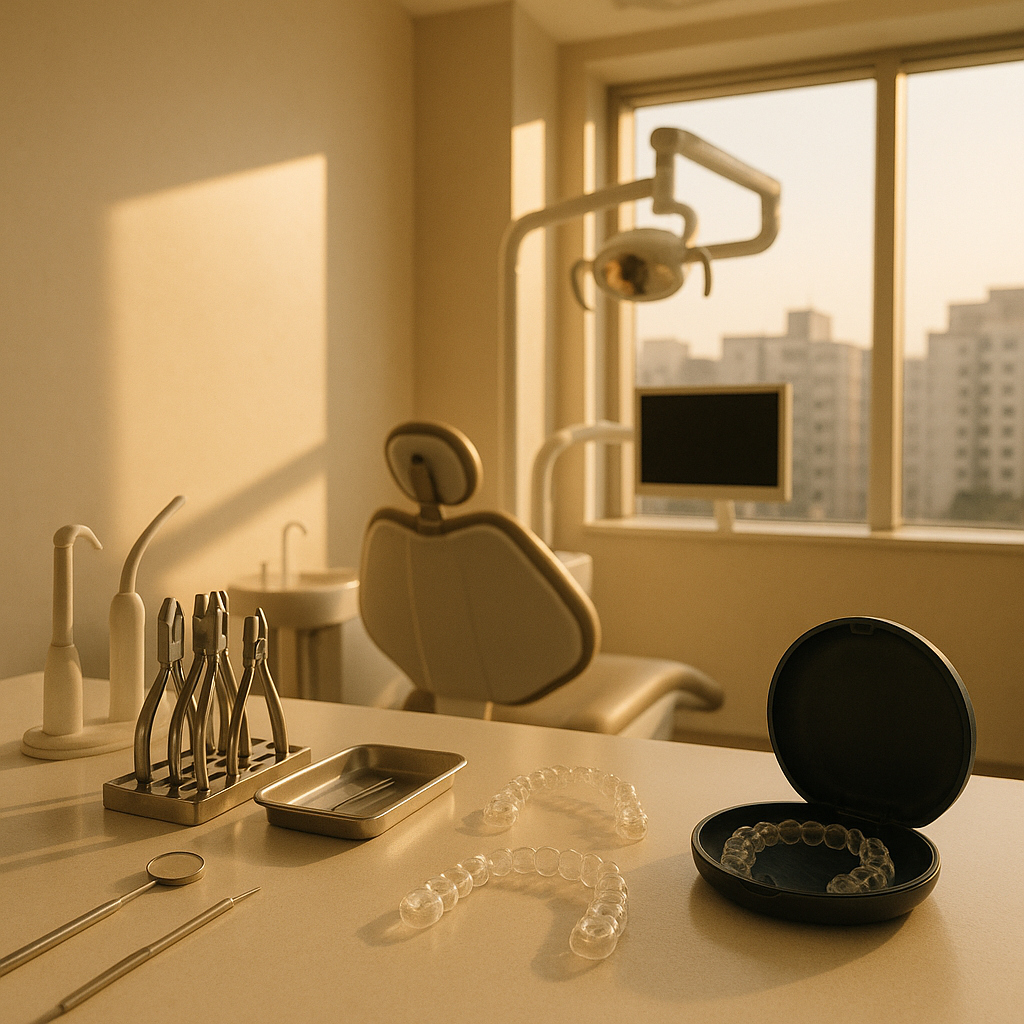
Clear aligners are made from a strong, flexible plastic that is virtually invisible when worn.
This makes them an attractive option for both adults and teenagers who desire orthodontic treatment without the visibility of traditional braces.
Each set of aligners is designed to be worn for about two weeks before switching to the next set, gradually moving the teeth into alignment.
One of the significant advantages of clear aligners is their removability.
Patients can take them out when eating, brushing, or flossing, which allows for better oral hygiene compared to fixed braces

Additionally, the comfort level is generally higher, as clear aligners do not have the metal brackets or wires that can cause irritation to the gums and cheeks.
The Safety and Trustworthiness of Clear Aligners
When considering orthodontic treatment, safety is paramount.
Clear aligners are made from medical-grade materials that are safe for prolonged contact with your teeth and gums.
Furthermore, advancements in technology have led to improved designs that ensure a proper fit, reducing the risk of discomfort or injury.
It is essential to seek treatment from a qualified orthodontist who will evaluate your specific dental needs and create a customized treatment plan.
Regular check-ups will ensure that your treatment progresses as planned, enhancing the overall safety and effectiveness of the process.
Trust in your orthodontist's expertise is crucial, as they will guide you through each stage of your treatment and make any necessary adjustments along the way.
Expertise in Clear Aligners
The effectiveness of
clear aligners largely depends on the expertise of the orthodontist overseeing your treatment.
An experienced practitioner will have a deep understanding of how to manipulate tooth movement and will use advanced technology to create precise aligners tailored to your dental structure.
This level of expertise not only ensures that your teeth shift correctly but also enhances the overall treatment experience.
Before beginning your treatment, a thorough consultation is essential.
During this appointment, your orthodontist will take digital scans or impressions of your teeth, which are used to create a 3D model.
This model allows for a visual representation of your treatment plan, showing how your teeth will move over time.
Being informed about the process helps build trust and confidence in your treatment.
Benefits of Clear Aligners
Clear aligners offer numerous benefits beyond aesthetics and comfort.
They can effectively treat a variety of orthodontic issues, including overcrowding, gaps between teeth, and misalignment

Some patients may even find that their treatment duration is shorter compared to traditional braces, depending on the complexity of their case.
Moreover, the removability of clear aligners allows for greater flexibility in lifestyle.
Patients can enjoy their favorite foods without restrictions and maintain their oral hygiene routine with ease.
This convenience is a significant factor in why many patients prefer clear aligners over traditional braces.
Conclusion: Embracing the Future of Orthodontics
Clear aligners represent a modern approach to orthodontic treatment, combining technology, safety, and aesthetics.
As you consider your options for achieving a straighter smile, it’s important to consult with an experienced orthodontist who can guide you through the process.
If you are ready to start your journey towards a confident smile, schedule a consultation today.
Your path to a better smile begins with an expert's guidance and a personalized treatment plan that suits your needs.